See Westminster Confession of Faith (with Scripture proofs) and the Canons of Dort
Westminster Confession of Faith (1646)
Chapter III: Of God’s Eternal Decree
I. God from all eternity, did, by the most wise and holy counsel of His own will, freely, and unchangeable ordain whatsoever comes to pass; 65 yet so, as thereby neither is God the author of sin,66 nor is violence offered to the will of the creatures; nor is the liberty or contingency of second causes taken away, but rather established.67
II. Although God knows whatsoever may or can come to pass upon all supposed conditions;
68 yet has He not decreed anything because He foresaw it as future, or as that which would come to pass upon such conditions. 69
69 ROM 9:11 (For the children being not yet born, neither having done any good or evil, that the purpose of God according to election might stand, not of works, but of him that calleth;) 13 As it is written, Jacob have I loved, but Esau have I hated. 16 So then it is not of him that willeth, nor of him that runneth, but of God that sheweth mercy. 18 Therefore hath he mercy on whom he will have mercy, and whom he will he hardeneth.
III. By the decree of God, for the manifestation of His glory, some men and angels 70 are predestinated unto everlasting life; and others foreordained to everlasting death.71
71 ROM 9:22 What if God, willing to shew his wrath, and to make his power known, endured with much longsuffering the vessels of wrath fitted to destruction: 23 And that he might make known the riches of his glory on the vessels of mercy, which he had afore prepared unto glory. EPH 1:5 Having predestinated us unto the adoption of children by Jesus Christ to himself, according to the good pleasure of his will, 6 To the praise of the glory of his grace, wherein he hath made us accepted in the beloved. PRO 16:4 The Lord hath made all things for himself: yea, even the wicked for the day of evil.
IV. These angels and men, thus predestinated, and foreordained, are particularly and unchangeably designed, and their number so certain and definite, that it cannot be either increased or diminished.72
V. Those of mankind that are predestinated unto life, God, before the foundation of the world was laid, according to His eternal and immutable purpose, and the secret counsel and good pleasure of His will, has chosen, in Christ, unto everlasting glory,73 out of His mere free grace and love, without any foresight of faith, or good works, or perseverance in either of them, or any other thing in the creature, as conditions, or causes
moving Him thereunto;74 and all to the praise of His glorious grace.75
74 ROM 9:11 (For the children being not yet born, neither having done any good or evil, that the purpose of God according to election might stand, not of works, but of him that calleth;) 13 As it is written, Jacob have I loved, but Esau have I hated. 16 So then it is not of him that willeth, nor of him that runneth, but of God that sheweth mercy. EPH 1:4 According as he hath chosen us in him before the foundation of the world, that we should be holy and without blame before him in love. 9 Having made known unto us the mystery of his will, according to his good pleasure which he hath purposed in himself.
VI. As God has appointed the elect unto glory, so has He, by the eternal and most free purpose of His will, foreordained all the means thereunto. Wherefore, they who are elected, being fallen in Adam, are redeemed by Christ, 76 are effectually called unto faith in Christ by His Spirit working in due season, are justified, adopted, sanctified,77 and kept by His power, through faith, unto salvation.78 Neither are any other redeemed by Christ, effectually called, justified, adopted, sanctified, and saved, but the elect only.79
79 JOH 17:9 I pray for them: I pray not for the world, but for them which thou hast given me; for they are thine. ROM 8:28 And we know that all things work together for good to them that love God, to them who are the called according to his purpose. JOH 6:64 But there are some of you that believe not. For Jesus knew from the beginning who they were that believed not, and who should betray him. 65 And he said, Therefore said I unto you, that no man can come unto me, except it were given unto him of my Father. 10:26 But ye believe not, because ye are not of my sheep, as I said unto you. 8:47 He that is of God heareth God’s words: ye therefore hear them not, because ye are not of God. 1JO 2:19 They went out from us, but they were not of us; for if they had been of us, they would no doubt have continued with us: but they went out, that they might be made manifest that they were not all of us.
VII. The rest of mankind God was pleased, according to the unsearchable counsel of His own will, whereby He extends or withholds mercy, as He pleases, for the glory of His sovereign power over His creatures, to pass by; and to ordain them to dishonor and wrath for their sin, to the praised of His glorious justice. 80
VIII. The doctrine of this high mystery of predestination is to be handled with special prudence and care, 81 that men, attending the will of God revealed in His Word, and yielding obedience thereunto, may, from the certainty of their effectual vocation, be assured of their eternal election.82 So shall this doctrine afford matter of praise, reverence, and admiration of God;83 and of humility, diligence, and abundant consolation to all that sincerely obey the Gospel. 84
The Canons of Dort (Dordrect, 1618-1619)
(contra the Remonstrants or Arminians)
FIRST HEAD OF DOCTRINE: Of Divine Predestination
Article 1
As all men have sinned in Adam, lie under the curse, and are deserving of eternal death, God would have done no injustice by leaving them all to perish, and delivering them over to condemnation on account of sin, according to the words of the apostle, “that every mouth may be stopped, and all the world may become guilty before God” (Rom. 3:19). And verse 23: “For all have sinned, and come short of the glory of God.” And Romans 6:23: “For the wages of sin is death.”
Article 2
But in this the love of God was manifested, that He sent His only begotten Son into the world, that whosoever
believeth on Him should not perish, but have everlasting life. “In this was manifested the love of God toward us, because that God sent His only begotten Son into the world, that we might live through Him” (1 John 4:9). “For God so loved the world, that He gave His only begotten Son, that whosoever believeth in Him should not perish, but have everlasting life” (John 3:16).
Article 3
And that men may be brought to believe, God mercifully sends the messengers of these most joyful tidings to
whom He will and at what time He pleaseth; by whose ministry men are called to repentance and faith in Christ crucified. “How then shall they call on Him in whom they have not believed? and how shall they believe in Him of whom they have not heard? and how shall they hear without a preacher? And how shall they preach, except they be sent?” (Rom. 10:14–15).
Article 4
The wrath of God abideth upon those who believe not this gospel. But such as receive it, and embrace Jesus the
Savior by a true and living faith, are by Him delivered from the wrath of God and from destruction, and have the gift of eternal life conferred upon them.
Article 5
The cause or guilt of this unbelief, as well as of all other sins, is no wise in God, but in man himself; whereas faith in Jesus Christ and salvation through Him is the free gift of God, as it is written: “For by grace are ye saved through faith; and that not of yourselves: it is the gift of God” (Eph. 2:8). “For unto you it is given in the behalf of Christ, not only to believe on Him,” etc. (Phil. 1:29).
Article 6
That some receive the gift of faith from God and others do not receive it proceeds from God’s eternal decree, for “known unto God are all His works from the beginning of the world” (Acts 15:18). “Who worketh all things after the counsel of His own will” (Eph. 1:11). According to which decree, He graciously softens the hearts of the elect, however obstinate, and inclines them to believe, while He leaves the non-elect in His just judgment to their own wickedness and obduracy. And herein is especially displayed the profound, the merciful, and at the same time the righteous discrimination between men, equally involved in ruin; or that decree of election and reprobation revealed in the Word of God, which though men of perverse, impure and unstable minds wrest to their own destruction, yet to holy and pious souls affords unspeakable consolation.
Article 7
Election is the unchangeable purpose of God, whereby, before the foundation of the world, He hath out of mere grace, according to the sovereign good pleasure of His own will, chosen, from the whole human race, which had fallen through their own fault from their primitive state of rectitude into sin and destruction, a certain number of persons to redemption in Christ, whom He from eternity appointed the Mediator and Head of the elect, and the foundation of salvation. This elect number, though by nature neither better nor more deserving than others, but with them involved in one common misery, God hath decreed to give to Christ, to be saved by Him, and effectually to call and draw them to His communion by His Word and Spirit, to bestow upon them true faith, justification and sanctification; and having powerfully preserved them in the fellowship of His Son, finally, to glorify them for the demonstration of His mercy and for the praise of His glorious grace, as it is written: “According as He hath chosen us in Him before the foundation of the world, that we should be holy and without blame before Him in love: having predestinated us unto the adoption of children by Jesus Christ to Himself, according to the good pleasure of His will, to the praise of the glory of His grace, wherein He hath made us accepted in the beloved” (Eph. 1:4–6). And elsewhere: “Whom He did predestinate, them He also called: and whom He called, them He also justified: and whom He justified them He also glorified” (Rom. 8:30).
Article 8
There are not various decrees of election, but one and the same decree respecting all those who shall be saved, both under the Old and New Testament; since the Scripture declares the good pleasure, purpose and counsel of the divine will to be one, according to which He hath chosen us from eternity, both to grace and glory, to salvation and the way of salvation, which He hath ordained that we should walk therein.
Article 9
This election was not founded upon foreseen faith, and the obedience of faith, holiness, or any other good quality or disposition in man, as the prerequisite, cause or condition on which it depended; but men are chosen to faith and to the obedience of faith, holiness, etc.; therefore election is the fountain of every saving good, from which proceeds faith, holiness, and the other gifts of salvation, and finally eternal life itself, as its fruits and effects, according to that of the apostle: “He hath chosen us [not because we were but] that we should be holy, and without blame, before Him in love” (Eph. 1:4).
Article 10
The good pleasure of God is the sole cause of this gracious election, which doth not consist herein, that out of all possible qualities and actions of men God has chosen some as a condition of salvation; but that He was pleased out of the common mass of sinners to adopt some certain persons as a peculiar people to Himself, as it is written, “For the children being not yet born, neither having done any good or evil,” etc., it was said (namely to Rebecca): “The elder shall serve the younger. As it is written, Jacob have I loved, but Esau have I hated” (Rom. 9:11-13). “And as many as were ordained to eternal life believed” (Acts 13:48).
Article 11
And as God Himself is most wise, unchangeable, omniscient and omnipotent, so the election made by Him can
neither be interrupted nor changed, recalled or annulled; neither can the elect be cast away, nor their number
diminished.
Article 12
The elect in due time, though in various degrees and in different measures, attain the assurance of this their eternal and unchangeable election, not by inquisitively prying into the secret and deep things of God, but by observing in themselves, with a spiritual joy and holy pleasure, the infallible fruits of election pointed out in the Word of God — such as a true faith in Christ, filial fear, a godly sorrow for sin, a hungering and thirsting after righteousness, etc.
Article 13
The sense and certainty of this election afford to the children of God additional matter for daily humiliation before Him, for adoring the depth of His mercies, for cleansing themselves, and rendering grateful returns of ardent love to Him, who first manifested so great love towards them. The consideration of this doctrine of election is so far from encouraging remissness in the observance of the divine commands or from sinking men in carnal security, that these, in the just judgment of God, are the usual effects of rash presumption or of idle and wanton trifling with the grace of election in those who refuse to walk in the ways of the elect.
Article 14
As the doctrine of divine election by the most wise counsel of God was declared by the prophets, by Christ
Himself, and by the apostles, and is clearly revealed in the Scriptures, both of the Old and New Testament, so it is still to be published in due time and place in the Church of God, for which it was peculiarly designed, provided it be done with reverence, in the spirit of discretion and piety, for the glory of God’s most holy Name, and for enlivening and comforting His people, without vainly attempting to investigate the secret ways of the Most High. “For I have not shunned to declare unto you all the counsel of God” (Acts 20:27); “O the depth of the riches both of the wisdom and knowledge of God! how unsearchable are His judgments, and His ways past finding out! For who hath known the mind of the Lord? or who hath been His counsellor?” (Rom. 11:33–34); “For I say, through the grace given unto me, to every man that is among you, not to think of himself more highly than he ought to think; but to think soberly, according as God hath dealt to every man the measure of faith” (Rom. 12:3); “Wherein God, willing more abundantly to shew unto the heirs of promise the immutability of His counsel, confirmed it by an oath: that by two immutable things, in which it was impossible for God to lie, we might have a strong consolation, who have fled for refuge to lay hold upon the hope set before us” (Heb. 6:17–18).
Article 15
What peculiarly tends to illustrate and recommend to us the eternal and unmerited grace of election, is the express testimony of sacred Scripture that not all, but some only are elected, while others are passed by in the eternal decree; whom God, out of His sovereign, most just, irreprehensible and unchangeable good pleasure, hath decreed to leave in the common misery into which they have wilfully plunged themselves, and not to bestow upon them saving faith and the grace of conversion; but permitting them in His just judgment to follow their own ways, at last for the declaration of His justice, to condemn and perish them forever, not only on account of their unbelief, but also for all their other sins. And this is the decree of reprobation which by no means makes God the author of sin (the very thought of which is blasphemy), but declares Him to be an awful, irreprehensible, and righteous Judge and avenger thereof.
Article 16
Those who do not yet experience a lively faith in Christ, an assured confidence of soul, peace of conscience, an
earnest endeavor after filial obedience, and glorying in God through Christ, efficaciously wrought in them, and do nevertheless persist in the use of the means which God hath appointed for working these graces in us, ought not to be alarmed at the mention of reprobation, nor to rank themselves among the reprobate, but diligently to persevere in the use of means, and with ardent desires devoutly and humbly to wait for a season of richer grace. Much less cause have they to be terrified by the doctrine of reprobation, who, though they seriously desire to be turned to God, to please Him only, and to be delivered from the body of death, cannot yet reach that measure of holiness and faith to which they aspire; since a merciful God has promised that He will not quench the smoking flax nor break the bruised reed. But this doctrine is justly terrible to those, who, regardless of God and of the Savior Jesus Christ, have wholly given themselves up to the cares of the world and the pleasures of the flesh, so long as they are not seriously converted to God.
Article 17
Since we are to judge of the will of God from His Word which testifies that the children of believers are holy, not by nature, but in virtue of the covenant of grace, in which they, together with the parents, are comprehended, godly parents have no reason to doubt of the election and salvation of their children whom it pleaseth God to call out of this life in their infancy.
Article 18
To those who murmur at the free grace of election and just severity of reprobation, we answer with the apostle: “Nay but, O man, who art thou that repliest against God?” (Rom. 9:20), and quote the language of our Savior: “Is it not lawful for Me to do what I will with Mine own?” (Matt. 20:15). And therefore with holy adoration of these mysteries, we exclaim in the words of the apostle: “O the depth of the riches both of the wisdom and knowledge of God! how unsearchable are His judgments, and His ways past finding out! For who hath known the mind of the Lord? or who hath been His counsellor? Or who hath first given to Him, and it shall be recompensed unto him again? For of Him, and through Him, and to Him, are all things: to whom be glory for ever. Amen” (Rom. 11:33–
36).
The true doctrine concerning election and rejection having been explained, the Synod rejects the errors of those who teach:
Rejection 1
That the will of God to save those who would believe and would persevere in faith and in the obedience of faith, is the whole and entire decree of election unto salvation, and that nothing else concerning this decree has been revealed in God’s Word. For these deceive the simple and plainly contradict the Scriptures which declare that God will not only save those who will believe, but that He has also from eternity chosen certain particular persons to whom above others He in time will grant both faith in Christ and perseverance, as it is written: “I have manifested Thy Name unto the men which Thou gavest Me out of the world” (John 17:6). “And as many as were ordained to eternal life believed” (Acts 13:48). And: “According as He hath chosen us in Him before the foundation of the world, that we should be holy and without blame before Him in love” (Eph. 1:4).
Rejection 2
That there are various kinds of election of God unto eternal life: the one general and indefinite, the other particular and definite; and that the latter in turn is either incomplete, revocable, nondecisive and conditional, or complete, irrevocable, decisive and absolute. Likewise: that there is one election unto faith and another unto salvation, so that election can be unto justifying faith without being a decisive election unto salvation.
For this is a fancy of men’s minds, invented regardless of the Scriptures, whereby the doctrine of election is
corrupted, and this golden chain of our salvation is broken: “Moreover whom He did predestinate, them He also called: and whom He called, them He also justified: and whom He justified, them He also glorified” (Rom. 8:30).
Rejection 3
That the good pleasure and purpose of God, of which Scripture makes mention in the doctrine of election, does not consist in this, that God chose certain persons rather than others, but in this, that He chose out of all possible conditions (among which are also the works of the law), or out of the whole order of things, the act of faith which from its very nature is undeserving, as well as its incomplete obedience, as a condition of salvation, and that He would graciously consider this in itself as a complete obedience and count it worthy of the reward
of eternal life. For by this injurious error the pleasure of God and the merits of Christ are made of none effect, and men are drawn away by useless questions from the truth of gracious justification and from the simplicity of Scripture, and this declaration of the apostle is charged as untrue: “Who hath saved us, and called us with an holy calling, not according to our works, but according to His own purpose and grace, which was given us in Christ Jesus before the world began” (2 Tim. 1:9).
Rejection 4
That in the election unto faith this condition is beforehand demanded, namely, that man should use the light of nature aright, be pious, humble, meek, and fit for eternal life, as if on these things election were in any way dependent. For this savors of the teaching of Pelagius, and is opposed to the doctrine of the apostle, when he writes: “Among whom also we all had our conversation in times past in the lusts of our flesh, fulfilling the desires of the flesh and of the mind; and were by nature the children of wrath, even as others. But God, who is rich in mercy, for His great love wherewith He loved us, even when we were dead in sins, hath quickened us together with Christ, (by grace ye are saved;) and hath raised us up together, and made us sit together in heavenly places in Christ Jesus: that in the ages to come He might show the exceeding riches of His grace in His kindness toward us through Christ Jesus. For by grace are ye saved through faith; and that not of yourselves: it is the gift of God: not of works, lest any man should boast” (Eph. 2:3–9).
Rejection 5
That the incomplete and non-decisive election of particular persons to salvation occurred because of a foreseen faith, conversion, holiness, godliness, which either began or continued for some time; but that the complete and decisive election occurred because of foreseen perseverance unto the end in faith, conversion, holiness and godliness; and that this is the gracious and evangelical worthiness for the sake of which he who is chosen is more worthy than he who is not chosen; and that therefore faith, the obedience of faith, holiness, godliness and
perseverance are not fruits of the unchangeable election unto glory, but are conditions, which, being required beforehand, were foreseen as being met by those who will be fully elected, and are causes without which the unchangeable election to glory does not occur. This is repugnant to the entire Scripture which constantly inculcates this and similar declarations: Election is not out of works, but of Him that calleth. “That the purpose of God according to election might stand, not of works, but of Him that calleth” (Rom. 9:11). “And as many as were ordained to eternal life believed” (Acts 13:48). “He hath chosen us in Him before the foundation of the world, that we should be holy” (Eph. 1:4). “Ye have not chosen Me, but I have chosen you” (John 15:16). “But if it be of works, then is it no more grace” (Rom. 11:6). “Herein is love, not that we loved God, but that He loved us, and sent His Son” (1 John 4:10).
Rejection 6
That not every election unto salvation is unchangeable, but that some of the elect, any decree of God notwithstanding, can yet perish and do indeed perish. By which gross error they make God to be changeable, and destroy the comfort which the godly obtain out of the firmness of their election, and contradict the Holy Scripture which teaches that the elect cannot be led astray: “Insomuch that, if it were possible, they shall deceive the very elect” (Matt. 24:24); that Christ does not lose those whom the Father gave Him: “And this is the Father’s will which hath sent Me, that of all which He hath given Me I should lose nothing” (John 6:39); and that God hath also glorified those whom He foreordained, called and justified: “Moreover whom He did predestinate, them He also called: and whom He called, them He also justified: and whom He justified, them He also glorified” (Rom. 8:30).
Rejection 7
That there is in this life no fruit and no consciousness of the unchangeable election to glory, nor any certainty, except that which depends on a changeable and uncertain condition. For not only is it absurd to speak of an uncertain certainty, but also contrary to the experience of the saints, who by virtue of the consciousness of their election rejoice with the apostle and praise this favor of God, Ephesians 1; who according to Christ’s admonition rejoice with His disciples that their names are written in heaven, “but rather rejoice, because your names are written in heaven” (Luke 10:20); who also place the consciousness of their election over against the fiery darts of the devil, asking: “Who shall lay any thing to the charge of God’s elect?” (Rom. 8:33).
Rejection 8
That God, simply by virtue of His righteous will, did not decide either to leave anyone in the fall of Adam and in the common state of sin and condemnation, or to pass anyone by in the communication of grace which is necessary for faith and conversion. For this is firmly decreed: “Therefore hath He mercy on whom He will have mercy, and whom He will He hardeneth” (Rom. 9:18). And also this: “It is given unto you to know the mysteries of the kingdom of heaven, but to them it is not given” (Matt. 13:11). Likewise: “I thank Thee, O Father, Lord of heaven and earth, because Thou hast hid these things from the wise and prudent, and hast revealed them unto babes. Even so, Father: for so it seemed good in Thy sight” (Matt. 11:25–26).
Rejection 9
That the reason why God sends the gospel to one people rather than to another is not merely and solely the good pleasure of God, but rather the fact that one people is better and worthier than another to whom the gospel is not communicated. For this Moses denies, addressing the people of Israel as follows: “Behold, the heaven and the heaven of heavens is the LORD’S thy God, the earth also, with all that therein is. Only the LORD had a delight in thy fathers to love them, and He chose their seed after them, even you above all people, as it is this day” (Deut. 10:14–15). And Christ said: “Woe unto thee, Chorazin! woe unto thee, Bethsaida! for if the mighty works, which were done in you, had been done in Tyre and Sidon, they would have repented long ago in sackcloth and ashes” (Matt. 11:21).
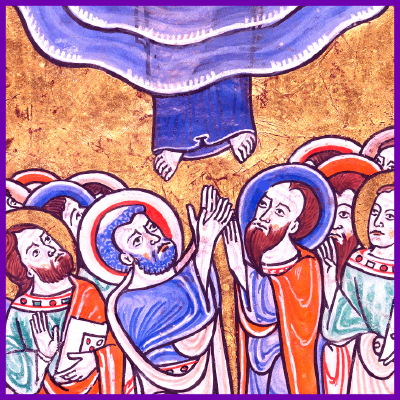
 Ascended King