Genesis-Acts-Revelation; Samuel-Saul-David to John the Baptizer-Jesus-Paul (Saul II)

“O you of little faith! Do not seek what you are to eat and what you are to drink, nor be worried. For all the nations of the world seek after these things, and your Father knows that you need them. Instead, seek his kingdom, and these things will be added to you.”
–Luke 12:28–31
“I saw in the night visions, and behold, with the clouds of heaven there came one like a son of man, and he came to the Ancient of Days and was presented before him. And to him was given dominion and glory and a kingdom, that all peoples, nations, and languages should serve him; his dominion is an everlasting dominion, which shall not pass away, and his kingdom one that shall not be destroyed.”
–-Daniel 7:13-14
Why did the Apostle Paul–the last apostle chosen and admittedly the least among them (“For I am the least of the apostles, unworthy to be called an apostle, because I persecuted the church of God” [1 Co 15:9])–play such a leading role in the early church and dominate the New Testament canon?
To understand Paul’s prominence in Acts and the New Testament, one must understand his relationship to the Kingdom of God. The kingdom is a key theme in Luke’s two companion volumes, but with a twist. The order of things in the OT’s Kingdom narrative doesn’t exactly match up with the one Luke tells in his Gospel and Acts. What went wrong in the OT royal story, namely the failed reign of King Saul, is corrected in Luke’s story of the New King and His Kingdom. A new and greater Saul, later named Paul, of Tarsus plays a pivotal role in righting the wrongs (thus becoming a kinsman-redeemer) of his royal namesake King Saul. The Apostle Paul will be the servant-herald of a greater kingdom than the one King Saul ruled in Canaan for only a brief time.
Recommended Readings
Michael Bull, The Bible Matrix: An Introduction to the DNA of Scripture (West Bow Press, 2010)
David A. Dorsey, The Literary Structure of the Old Testament: A Commentary on Genesis-Malachi (Baker Academic, 1999)
James B. Jordan, Through New Eyes: Developing a Biblical View of the World (Wipf and Stock Publishers, 1999)
Peter J. Leithart, The Kingdom and the Power: Rediscovering the Centrality of the Church (P&R Publishing, 1993)
Peter J. Leithart, A House for My Name: A Survey of the Old Testament (Canon Press, 2000)
What is the Kingdom of God?
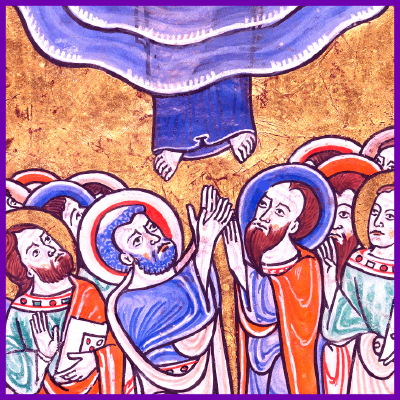
The book of Acts is book-ended by references to the kingdom of God. In the first chapter, just prior to his ascension, Jesus speaks about the kingdom of God. At the conclusion of Acts, Paul proclaims the kingdom of God in Rome.
- “He [Jesus] presented himself alive to them after his suffering by many proofs, appearing to them during forty days and speaking about the kingdom of God.”
–Acts 1:3
- “He [Paul] lived there two whole years at his own expense, and welcomed all who came to him, proclaiming the kingdom of God and teaching about the Lord Jesus Christ with all boldness and without hindrance.”
–Acts 28:30–31
But what is the kingdom of God?
The “kingdom of God” (also “kingdom of heaven” or other variations) is used throughout the Scriptures in several ways. The idea has also been used (and abused) throughout church history to justify all kinds of behaviors–from escaping everyday life into monastic isolation to trying to amass power on earth with the world’s weapons of war. Israel misunderstood God’s kingship over them and demanded a king like those ruling the pagan nations. When Christ’s disciples encounter their risen Lord, the first question they ask is whether he’ll return “the kingdom to Israel?” But Christ’s kingdom is not about exalting a single nation-state (Israel, etc.) over others, or escaping this world (monasticism), or dominating others with the instruments of violence (Psalm 20:7: “Some trust in chariots and some in horses, but we trust in the name of the LORD our God;” I Kings 10:26; Matt 26:52). It is about Christ’s everlasting rule over all that exists with righteousness, justice, truth, grace, and peace.
When Israel demanded a king like the others, they essentially told God (“The Lord of Hosts [Armies]”) that He was not their true sovereign, not up to the task, because He didn’t look and act like the other kings of the neighboring pagan nations. The Lord had defeated the kings and their powerful armies from Egypt to Canaan without chariots or horses, yet the Israelites yearned for the appearance of earthly power more than efficacy of the Triune Lord’s divine authority. They wanted a king just like the pagan rulers to strike fear in the hearts of their enemies. But without the Lord, their enemies had little to fear. God warned them that another king would inevitably become a cruel master and demand their families and fortunes (I Samuel 8:11-18), but the people refused to listen. Instead, they cried out, “No! But there shall be a king over us, that we also may be like all the nations, and that our king may judge us and go out before us and fight our battles” (I Samuel 8:19-20). That cry echoed Adam and Eve’s treason in the Garden in Genesis and would be echoed in the NT: “We have no king but Caesar!” They all wanted in their unfaithfulness a king like the other caesars of their day, and Saul, who was handsome and taller than others (I Samuel 9:1-16), fit the profile.
At the beginning of his reign, Saul was humble–from the smallest tribe of Israel, Benjamin (I Samuel 9:21)–and he didn’t seek power or glory for himself. He was humble in victory over the Ammonites at Jabesh-Gilead (I Samuel 11:12-13). He was like Moses, reluctant to lead, but the Lord called him with three confirming signs (I Samuel 10:1-7). But Saul quickly fell into the sins common to the pagan kings: (1) He leaned on his own understanding, not God’s law, and offered unlawful sacrifice–and then blamed the people for his sin (like Aaron and his golden calf); (2) he mistreated his army by withholding food from his soldiers during battle with the Philistines and threatened to kill his own son for a minor infraction of his foolish command (I Samuel 14); and (3) worst of all, he directly disobeyed God by sparing King Agag and the Amalekites, the sworn enemies of God, from the destruction God commanded. King Saul failed to fulfill his prime directive: to conquer the gentile nations!!
“[King] Saul sinned in the Garden, failing to wait seven days for Samuel to make the sacrifice. He sinned in the Land, making a rash vow that kept food from his men and threatened the life of his son Jonathan. And his sin in the World, styling himself as a Gentile king and friend to Amalek (the Lord’s sworn enemy), forced the Lord to reject him. His kingdom would be taken away.”
–Michael Bull, The Bible Matrix: An Introduction to the DNA of Scripture
When the Lord anointed David to displace Saul as king, Saul sought to persecute the Lord’s anointed. David fled Saul for a decade (before Saul died in battle by the hand of his own servant to preserve his “honor” in the battle of Mount Gilboa), wandering about the “wilderness” before he finally entered his “kingdom.” In his famous confrontation with Goliath, David proved that he didn’t trust in the weapons of war, but in the Lord of Hosts by boldly declaring “that all the earth may know that there is a God in Israel, and that all this assembly may know that the LORD saves not with sword and spear. For the battle is the LORD’s, and he will give you into our hand” (1 Samuel 17:46–47). David went on to do many things that showed he was “a man after God’s own heart” (I Samuel 13:14, echoed by Paul in Acts 13:22), though not without significant sin, and set the paradigm from Christ’s kingly rule later: Jesus came from the royal line of David (Luke 1:27) and received the throne of his father David (1:32). But Jesus is a greater king than David, and his kingdom is greater than Saul or David’s.
The kingdom of God is, according to Leithart, “the new world order that Christ established in His life, death, resurrection, and ascension, a new order of things that will be fully revealed and established only at Christ’s return” (The Kingdom and the Power [1993], p. 17). That new order has several distinctive features:
- Christ’s kingdom is new because it includes us (again!). God has always been the king and sovereign over all things, but Christ’s life and redemptive work reconnected mankind to God’s rule over the universe. The First Adam was created to rule over creation (as described in the so-called “dominion mandate” of Gen. 1:27-28: “And God said to them, “Be fruitful and multiply and fill the earth and subdue it, and have dominion over the fish of the sea and over the birds of the heavens and over every living thing that moves on the earth”). But when Adam sinned, we lost our royal status and forfeited our authority to have dominion by his/our treason and our alliance with God’s enemy, the Devil. Instead of enjoying God’s blessings, we chose to live under His curses of sweat, pain, and death. When Christ, the Second Adam, finally came in the fullness of time, he reversed the damage done by the First Adam’s fall by paying the penalty for our sins (by his death on the cross), giving us new life (by his resurrection from the dead), and restoring us to full fellowship with God the Father (by his ascension to the Father’s right hand in Heaven). Christ’s redemptive work not only restored humanity to our original position as vicegerent* over creation, but by Christ’s bodily ascension, He took our humanity into the very throne room of God, into the Trinity itself, where we may reign with him as joint heirs with Christ over all creation (“If we have died with him, we will also live with him; if we endure, we will also reign with him . . .” (2 Timothy 2:11–12). Christ’s kingdom is thus greater than what Adam first experienced.
- *A vicegerent is a person appointed by a ruler to exercise that ruler’s power and authority on his behalf. For example, when Abraham ordered his servant to find a wife for his son Isaac, he made the servant pledge a solemn oath to find a bride among Abraham’s relations and to settle the terms of the engagement as if he were Abraham himself–that servant became Abraham’s vicegerent possessing his full personal authority and power (see Genesis 24:1-9).
- The new order is a present reality (it “already” exists in the world today! Matthew 3:2: “Repent, for the kingdom of heaven is at hand!”), begun when Christ took the form of human flesh at his incarnation. Saul and David’s Kingdom of Israel was a type of the kingdom to come–for them the true kingdom remained in the future. When Christ came, the kingdom became a present reality. But the best is still to come: it remains a future hope (it is “not yet” fully revealed), because it has not fully matured and or been completed at this time. The new heavens and the new earth still await their consummation at Christ’s ultimate return. But the kingdom has come because Christ was enthroned at his ascension and He has received all authority in heaven and on earth (Matthew 28:18). Sin and death still have a tenuous grip on this world, but they no longer have dominion. Satan has been thrown down. Christ, the sinless lamb of God, has been exalted and crowned Lord of All*.
- *Christ is king and lord of all, “Pantokrator” (Greek: “Omnipotent,” “Ruler of all things,” frequently translated “the Almighty” [2 Cor 6:18, Rev. 1:8, 4:8, 11:17, etc.]).
- The new kingdom is perfect, reflecting the divine perfection of the Prince of Peace who rules over all. Unlike the faltering decisions of earthly kings, Christ is the Son of God, Son of Man, who leads in all holiness and righteousness. He is the King of kings and Lord of lords. As the prophet Isaiah foretold the incarnation of Jesus,
For unto us a child is born, to us a son is given; and the government shall be upon his shoulder, and his name shall be called Wonderful Counselor, Mighty God, Everlasting Father, Prince of Peace. Of the increase of his government and of peace there will be no end, on the throne of David and over his kingdom, to establish it and to uphold it with justice and with righteousness from this time forth and forevermore. The zeal of the LORD of hosts will do this.
–Isaiah 9:6–7
- The new kingdom encompasses the universe. The kingdoms of this world are limited by geography and authority. The kings and queens of England have no meaningful authority beyond the borders of the UK. The Kingdom of God, however, knows no such bounds. Christ’s sovereignty extends over every square inch of all that exists. In fact, every knee shall bow and every tongue confess that Jesus is Lord and King (Isaiah 45:23; Romans 14:11; Philippians 2:11)
“Therefore God has highly exalted him and bestowed on him the name that is above every name, so that at the name of Jesus every knee should bow, in heaven and on earth and under the earth, and every tongue confess that Jesus Christ is Lord, to the glory of God the Father.”
–Philippians 2:9–11
- And unlike other kingdoms, the kingdom of God is everlasting.
“Then the seventh angel blew his trumpet, and there were loud voices in heaven, saying, ‘The kingdom of the world has become the kingdom of our Lord and of his Christ, and he shall reign forever and ever.’”
–Revelation 11:15
NT Changes to/Fulfillment of the OT King-Kingdom Narrative Structure
| OT King-Kingdom Narrative | NT King-Kingdom Narrative |
|---|---|
| A. The Prophet Samuel (Nazarite) Hannah weeps, pleas for a child, conceives at Ramah, I Sam. 1:8-20; Eli, the Priest, dedicates Samuel, I Sam. 1; Hannah’s Prayer, I Sam. 2 (quoted by Mary in Luke 1); “Samuel, Samuel” called I Sam. 3:10; dies at his home in Ramah, I Sam. 25:1 | A’. John the Baptizer (Nazarite) Zecharias, the Priest, speechless, Luke 1; Elizabeth, advanced in years, beyond childbearing years, Luke 1:7; Mary’s Song-Prayer, quotes Hannah’s prayer (I Sam. 2) in Luke 1:46-56; Matthew 2:18 quotes Jer. 31:15: Voice heard in Ramah, Rachel weeping for her children |
| B. (Saul I) King Saul (like the other [pagan] kings) Benjaminite; Israel demands a king at Ramah, I Sam. 8:4, 10:19 Spirit departs Saul, I Sam.16:14; Saul, handsome, tall man, Benjaminite, I Sam. 9; Saul’s unlawful sacrifice, I Sam. 13; Saul fails to destroy the Gentiles, I Sam. 15;* God rejects Saul, anoints David, I Sam. 15-16; Spirit departs Saul, I Sam.16:14; Saul attempts to kill David, persecutes David, followers, I Sam 19; God withdraws his blessing, I Sam.18:12; Disguises/renames self for witch, I Sam. 28; Falls, dies by suicide, I Sam. 31 | — |
| C. David, True King (Chosen by God) I Samuel 17-II Samuel 24; Samuel anoints David king, “he is the one,” I Sam. 16:11-13 (see Hannah’s prayer, 2:10) | C’. Christ, Greater David, True King (Chosen by God) Gospels, Acts 2:25, 34; John baptizes Jesus, anointed king, “he is my beloved Son,” Mt. 3:13-17, Lk. 3:21-22 |
| D. Solomon, the Heir King, Son by Blood Solomon’s speech at dedication of the Temple, “Will God indeed dwell on the earth? Behold, heaven and the heaven of heavens cannot contain You. How much less the temple which I have built” paraphrased by Stephen before council (I Kings 8:27//Acts 7:48); Solomon turned from the Lord, loved foreign women, set up idols, collected horses/chariots; Died with the kingdom about to be torn in two, king and kingdom’s glory lost | D’. Stephen (“Crown”), Son by Martyr’s Blood Full of faith and power (Acts 7:8); Speaks with wisdom and the Spirit (Acts 7:10); Cites Solomon’s building of the Temple (Acts 7:47); Speech before Council paraphrases Solomon’s speech at the dedication of the Temple, “God doesn’t dwell in temples made with hands” (I Kings 8:27; Acts 7:48) Full of the Holy Spirit (Acts 7:55); Dies seeing the glory of God and exalted King Jesus at His right hand (Acts 7:55-57) |
| E. Unfaithful Kings of the Twelve Tribes Twelve tribes, Kingdom divided (Israel, Judea); judgment and exile under Gentile nations/rulers | E. Faithful Twelve Apostles over the Church Peter’s sermon to all Israel: Christ, Messiah-King, exalted to God’s right hand; Gospel reunites the Twelve Tribes/Kingdom; Blessing of the Gospel, Great Commission to all nations, Gentiles subdued |
| F. 400 Years of Divine/Prophetic Silence Intertestamental period; Exile and occupation of the land by Gentile Empires; growth of “global” Gentile empires: Greece, Rome. | F’. Holy Spirit Poured Out at Pentecost–Prophetic Silence Broken All filled with the Holy Spirit, speak in own languages prophetically; all nations praise God in own tongue/Babel & 400 years of silence reversed; many added daily who were being saved (Acts 2) |
| B’. Greater Saul-Paul, Apostle & Kinsman-Redeemer Benjaminite; “one untimely born”, I Cor. 15:8;# Saul persecutes Jesus and his followers, kills Stephen, Acts 8:1-3, 9:1; Saul is called by his Hebrew name (not his Greek name Paul 11 times after his conversion, highlighting his ongoing identification with the more famous King Saul; sorcerer (Simon) converts/sins, rebuked by Peter, Acts 8:9-25; “Saul, Saul” called: Falls, “dies”-blinded, born again, Acts 9:4-9; God blesses Saul, Acts 9:10-31; Saul, called Paul, Acts 13:9 (note sorcerer & speech at Antioch); Paul, a short and unattractive man, Benjaminite, Rom. 11: 1, 2 Cor. 11; Paul’s mission work conquers the Gentiles with Gospel, Acts 11-28; Paul consistently identifies himself as a “servant” or “slave” of Jesus the Christ (Lord/King)–reorienting his namesake “Saul”-role from that of a pretender king to giving obeisance before the True King, King Jesus. |
King Saul
*The prophet Samuel anointed Saul king over Israel and immediately gave him the Lord’s direct command to conquer and annihilate the Amalakites (I Sam 15:1-3: “And Samuel said to Saul, ‘The LORD sent me to anoint you king over his people Israel; now therefore listen to the words of the LORD. Thus says the LORD of hosts, ‘I have noted what Amalek did to Israel in opposing them on the way when they came up out of Egypt. Now go and strike Amalek and devote to destruction all that they have. Do not spare them, but kill both man and woman, child and infant, ox and sheep, camel and donkey.'” This echoed what the Lord had told Moses in Deut. 25:19: “Therefore when the LORD your God has given you rest from all your enemies around you, in the land that the LORD your God is giving you for an inheritance to possess, you shall blot out the memory of Amalek from under heaven; you shall not forget” [Deut. 25:19]).
However, King Saul disobeyed the Lord’s primary commandment for his reign by sparing the life of King Agag of the Amalekites and by keeping some of their possessions as spoils of conquest. Because “Saul and the people spared Agag and the best of the sheep and of the oxen and of the fattened calves and the lambs, and all that was good, and would not utterly destroy them, . . . the word of the LORD came to Samuel: ‘I regret that I have made Saul king, for he has turned back from following me and has not performed my commandments‘” (I Samuel 15:9-11). So when Samuel came to Saul,
I Samuel 15:13-23: “Saul said to him, ‘Blessed be you to the LORD. I have performed the commandment of the LORD.’ And Samuel said, ‘What then is this bleating of the sheep in my ears and the lowing of the oxen that I hear?’ Saul said, ‘They have brought them from the Amalekites, for the people spared the best of the sheep and of the oxen to sacrifice to the LORD your God, and the rest we have devoted to destruction.’ Then Samuel said to Saul, ‘Stop! I will tell you what the LORD said to me this night.’ And he said to him, ‘Speak.’
And Samuel said, ‘Though you are little in your own eyes, are you not the head of the tribes of Israel? The LORD anointed you king over Israel. And the LORD sent you on a mission and said, ‘Go, devote to destruction the sinners, the Amalekites, and fight against them until they are consumed.’ Why then did you not obey the voice of the LORD? Why did you pounce on the spoil and do what was evil in the sight of the LORD?’ And Saul said to Samuel, ‘I have obeyed the voice of the LORD. I have gone on the mission on which the LORD sent me. I have brought Agag the king of Amalek, and I have devoted the Amalekites to destruction. But the people took of the spoil, sheep and oxen, the best of the things devoted to destruction, to sacrifice to the LORD your God in Gilgal.’ And Samuel said, ‘Has the LORD as great delight in burnt offerings and sacrifices,
as in obeying the voice of the LORD? Behold, to obey is better than sacrifice, and to listen than the fat of rams. For rebellion is as the sin of divination, and presumption is as iniquity and idolatry. Because you have rejected the word of the LORD, he has also rejected you from being king.‘”
[Note: In the time of Israel’s Queen Esther, Haman, the Agagite, was a direct descendant of King Agag, who was a wicked ruler. ” Esther 8:3: Then Esther spoke again to the king. She fell at his feet and wept and pleaded with him to avert the evil plan of Haman the Agagite and the plot that he had devised against the Jews.”]
Saul of Tarsus/Apostle Paul
#“For I delivered to you as of first importance what I also received: that Christ died for our sins in accordance with the Scriptures, that he was buried, that he was raised on the third day in accordance with the Scriptures, and that he appeared to Cephas, then to the twelve. Then he appeared to more than five hundred brothers at one time, most of whom are still alive, though some have fallen asleep. Then he appeared to James, then to all the apostles. Last of all, as to one untimely born, he appeared also to me. For I am the least of the apostles, unworthy to be called an apostle, because I persecuted the church of God. But by the grace of God I am what I am, and his grace toward me was not in vain. On the contrary, I worked harder than any of them, though it was not I, but the grace of God that is with me. Whether then it was I or they, so we preach and so you believed.”
–I Corinthians 15:3-11
“Now I am speaking to you Gentiles. Inasmuch then as I am an apostle to the Gentiles, I magnify my ministry in order somehow to make my fellow Jews jealous, and thus save some of them. For if their rejection means the reconciliation of the world, what will their acceptance mean but life from the dead? If the dough offered as first fruits is holy, so is the whole lump, and if the root is holy, so are the branches.”
–Romans 11:13–16
Ultimately, Saul-Paul, a servant of King Jesus, completes the principal task that King Saul so miserably failed to achieve: the conquest of the Gentile nations.
Parallels and Chiasms between Luke and Acts


“Recovering the Old Testament as a text in which Christians live and move and have their being is one of the most urgent tasks before the church. Reading the Reformers is good and right. Christian political activism has its place. Even at their best, however, these can only bruise the heel of a world that has abandoned God. But the Bible–the Bible is a sword to divide joints from marrow, a weapon to crush the head.”
Peter Leithart, The Kingdom and the Power
 Ascended King
You must be logged in to post a comment.