A. The Divine Gift of Dominion over Creation
“The coming of the kingdom is the great event which Jesus connects with his appearance and activity, and that consequently in his teaching, which was so closely dependent on his working, this event must also have a corresponding prominence.”
–Geerhardus Vos, The Coming of the Kingdom and the Church (1972)
Then God said, “Let us make man in our image, after our likeness. And let them have dominion over the fish of the sea and over the birds of the heavens and over the livestock and over all the earth and over every creeping thing that creeps on the earth.” So God created man in his own image, in the image of God he created him; male and female he created them. And God blessed them. And God said to them, “Be fruitful and multiply and fill the earth and subdue it, and have dominion over the fish of the sea and over the birds of the heavens and over every living thing that moves on the earth.”
–Genesis 1:26-28
The “kingdom of God” (also called the “kingdom of heaven” and other variations) is mentioned throughout the Scriptures in multiple settings. From the sixth day of creation to consummation of all things anticipated in Revelation, the kingdom plays a prominent and organizing role for God’s redemptive work and the restoration of all things under his divine rule. From the beginning to the end of his ministry, Jesus emphasized the importance of God’s kingdom. When Christ’s disciples encounter their resurrected Lord, the first question they ask is whether he’ll return “the kingdom to Israel?” But Christ’s kingdom is not about exalting a single nation-state like Israel over others, or escaping this world (monasticism), or dominating others with the worldly instruments of power (Psalm 20:7: “Some trust in chariots and some in horses, but we trust in the name of the LORD our God;” I Kings 10:26; Matt 26:52). The kingdom is about Christ’s everlasting rule over all that exists with righteousness, justice, truth, grace, and peace.
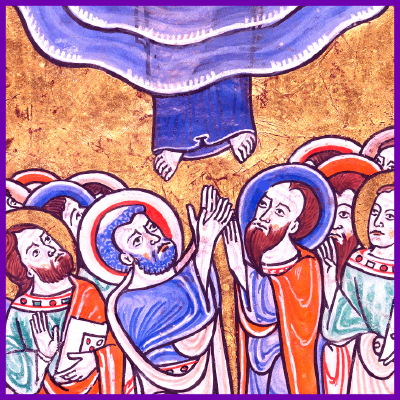
The kingdom is not just a future state which will comes at Christ’s return, but it is a current state inaugurated after Christ’s ascension and coronation to the right hand of God the Father. After all, Jesus teaches us to pray “thy kingdom come, thy will be done on earth as it is in heaven” (Matt. 6:9-13).
The idea of the kingdom has been used (and abused) throughout church history to justify all kinds of bad ideas –from escaping everyday life for monastic isolation to amassing the world’s weapons of war to wield “kingly” power on earth. Israel often misunderstood God’s kingship over them. So much so, they demanded a king like those ruling the pagan nations around them.
When Israel demanded a king like the others, they essentially told God (“The Lord of Hosts [Armies]”) that He was not their true sovereign, not up to the task, because He didn’t look and act like the other kings of the neighboring pagan nations. The Lord had defeated the kings and their powerful armies from Egypt to Canaan without chariots or horses, yet the Israelites yearned for the appearance of earthly power more than efficacy of the Triune Lord’s divine authority. They wanted a king just like the pagan rulers to strike fear in the hearts of their enemies. But without the Lord, their enemies had little to fear. God warned them that another king would inevitably become a cruel master and demand their families and fortunes (I Samuel 8:11-18), but the people refused to listen. Instead, they cried out, “No! But there shall be a king over us, that we also may be like all the nations, and that our king may judge us and go out before us and fight our battles” (I Samuel 8:19-20). That cry echoed Adam and Eve’s treason in the Garden in Genesis and would be echoed in the NT: “We have no king but Caesar!” They all wanted in their unfaithfulness a king like the other caesars of their day, and Saul, who was handsome and taller than others (I Samuel 9:1-16), fit the profile.
At the beginning of his reign, Saul was humble–from the smallest tribe of Israel, Benjamin (I Samuel 9:21)–and he didn’t seek power or glory for himself. He was humble in victory over the Ammonites at Jabesh-Gilead (I Samuel 11:12-13). He was like Moses, reluctant to lead, but the Lord called him with three confirming signs (I Samuel 10:1-7). But Saul quickly fell into the sins common to the pagan kings: (1) He leaned on his own understanding, not God’s law, and offered unlawful sacrifice–and then blamed the people for his sin (like Aaron and his golden calf); (2) he mistreated his army by withholding food from his soldiers during battle with the Philistines and threatened to kill his own son for a minor infraction of his foolish command (I Samuel 14); and (3) worst of all, he directly disobeyed God by sparing King Agag and the Amalekites, the sworn enemies of God, from the destruction God commanded. King Saul failed to fulfill his prime directive: to conquer the gentile nations!!
“[King] Saul sinned in the Garden, failing to wait seven days for Samuel to make the sacrifice. He sinned in the Land, making a rash vow that kept food from his men and threatened the life of his son Jonathan. And his sin in the World, styling himself as a Gentile king and friend to Amalek (the Lord’s sworn enemy), forced the Lord to reject him. His kingdom would be taken away.”
–Michael Bull, The Bible Matrix: An Introduction to the DNA of Scripture
When the Lord anointed David to displace Saul as king, Saul sought to persecute the Lord’s anointed. David fled Saul for a decade (before Saul died in battle by the hand of his own servant to preserve his “honor” in the battle of Mount Gilboa), wandering about the “wilderness” before he finally entered his “kingdom.” In his famous confrontation with Goliath, David proved that he didn’t trust in the weapons of war, but in the Lord of Hosts by boldly declaring “that all the earth may know that there is a God in Israel, and that all this assembly may know that the LORD saves not with sword and spear. For the battle is the LORD’s, and he will give you into our hand” (1 Samuel 17:46–47). David went on to do many things that showed he was “a man after God’s own heart” (I Samuel 13:14, echoed by Paul in Acts 13:22), though not without significant sin, and set the paradigm from Christ’s kingly rule later: Jesus came from the royal line of David (Luke 1:27) and received the throne of his father David (1:32). But Jesus is a greater king than David, and his kingdom is greater than Saul or David’s.
The kingdom of God is, according to Leithart, “the new world order that Christ established in His life, death, resurrection, and ascension, a new order of things that will be fully revealed and established only at Christ’s return” (The Kingdom and the Power [1993], p. 17). That new order has several distinctive features:
- Christ’s kingdom is new because it includes us (again!). God has always been the king and sovereign over all things, but Christ’s life and redemptive work reconnected mankind to God’s rule over the universe. The First Adam was created to rule over creation (as described in the so-called “dominion mandate” of Gen. 1:27-28: “And God said to them, “Be fruitful and multiply and fill the earth and subdue it, and have dominion over the fish of the sea and over the birds of the heavens and over every living thing that moves on the earth”). But when Adam sinned, we lost our royal status and forfeited our authority to have dominion by his/our treason and our alliance with God’s enemy, the Devil. Instead of enjoying God’s blessings, we chose to live under His curses of sweat, pain, and death. When Christ, the Second Adam, finally came in the fullness of time, he reversed the damage done by the First Adam’s fall by paying the penalty for our sins (by his death on the cross), giving us new life (by his resurrection from the dead), and restoring us to full fellowship with God the Father (by his ascension to the Father’s right hand in Heaven). Christ’s redemptive work not only restored humanity to our original position as vicegerent* over creation, but by Christ’s bodily ascension, He took our humanity into the very throne room of God, into the Trinity itself, where we may reign with him as joint heirs with Christ over all creation (“If we have died with him, we will also live with him; if we endure, we will also reign with him . . .” (2 Timothy 2:11–12). Christ’s kingdom is thus greater than what Adam first experienced.
- *A vicegerent is a person appointed by a ruler to exercise that ruler’s power and authority on his behalf. For example, when Abraham ordered his servant to find a wife for his son Isaac, he made the servant pledge a solemn oath to find a bride among Abraham’s relations and to settle the terms of the engagement as if he were Abraham himself–that servant became Abraham’s vicegerent possessing his full personal authority and power (see Genesis 24:1-9).
- The new order is a present reality (it “already” exists in the world today! Matthew 3:2: “Repent, for the kingdom of heaven is at hand!”), begun when Christ took the form of human flesh at his incarnation. Saul and David’s Kingdom of Israel was a type of the kingdom to come–for them the true kingdom remained in the future. When Christ came, the kingdom became a present reality. But the best is still to come: it remains a future hope (it is “not yet” fully revealed), because it has not fully matured and or been completed at this time. The new heavens and the new earth still await their consummation at Christ’s ultimate return. But the kingdom has come because Christ was enthroned at his ascension and He has received all authority in heaven and on earth (Matthew 28:18). Sin and death still have a tenuous grip on this world, but they no longer have dominion. Satan has been thrown down. Christ, the sinless lamb of God, has been exalted and crowned Lord of All*.
- *Christ is king and lord of all, “Pantokrator” (Greek: “Omnipotent,” “Ruler of all things,” frequently translated “the Almighty” [2 Cor 6:18, Rev. 1:8, 4:8, 11:17, etc.]).
- The new kingdom is perfect, reflecting the divine perfection of the Prince of Peace who rules over all. Unlike the faltering decisions of earthly kings, Christ is the Son of God, Son of Man, who leads in all holiness and righteousness. He is the King of kings and Lord of lords. As the prophet Isaiah foretold the incarnation of Jesus,
For unto us a child is born, to us a son is given; and the government shall be upon his shoulder, and his name shall be called Wonderful Counselor, Mighty God, Everlasting Father, Prince of Peace. Of the increase of his government and of peace there will be no end, on the throne of David and over his kingdom, to establish it and to uphold it with justice and with righteousness from this time forth and forevermore. The zeal of the LORD of hosts will do this.
–Isaiah 9:6–7
- The new kingdom encompasses the universe. The kingdoms of this world are limited by geography and authority. The kings and queens of England have no meaningful authority beyond the borders of the UK. The Kingdom of God, however, knows no such bounds. Christ’s sovereignty extends over every square inch of all that exists. In fact, every knee shall bow and every tongue confess that Jesus is Lord and King (Isaiah 45:23; Romans 14:11; Philippians 2:11)
“Therefore God has highly exalted him and bestowed on him the name that is above every name, so that at the name of Jesus every knee should bow, in heaven and on earth and under the earth, and every tongue confess that Jesus Christ is Lord, to the glory of God the Father.”
–Philippians 2:9–11
- And unlike other kingdoms, the kingdom of God is everlasting.
“Then the seventh angel blew his trumpet, and there were loud voices in heaven, saying, ‘The kingdom of the world has become the kingdom of our Lord and of his Christ, and he shall reign forever and ever.’”
–Revelation 11:15
 Ascended King