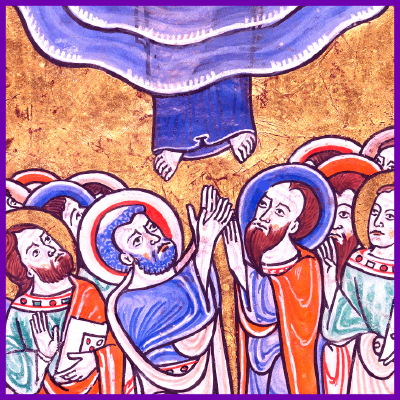
Following the death of Herod (Acts 12:20-23), Luke reports that “the word of God increased and multiplied” (Acts 12:24). Barnabas, Saul & John Mark return to Antioch from Jerusalem “after completing their service” (Acts 12: 25). At Antioch, Saul & Barnabas are “set apart” (ordained) by the “laying on of hands” to do the work the Holy Spirit has called them: to bring the light of the Gospel to the Gentile world (Acts 13:1-3ff).

Jacob Pynas (Dutch, Amsterdam, 1592/93–after 1650 [?]), Oil on wood
Metropolitan Museum of Art, NY; http://www.metmuseum.org/Collections/search-the-collections/437351
Audio Presentation (Roy Atwood, Sunday School, Trinity Reformed Church, Nov. 1, 2020)
The Pivotal Significance of Acts 13
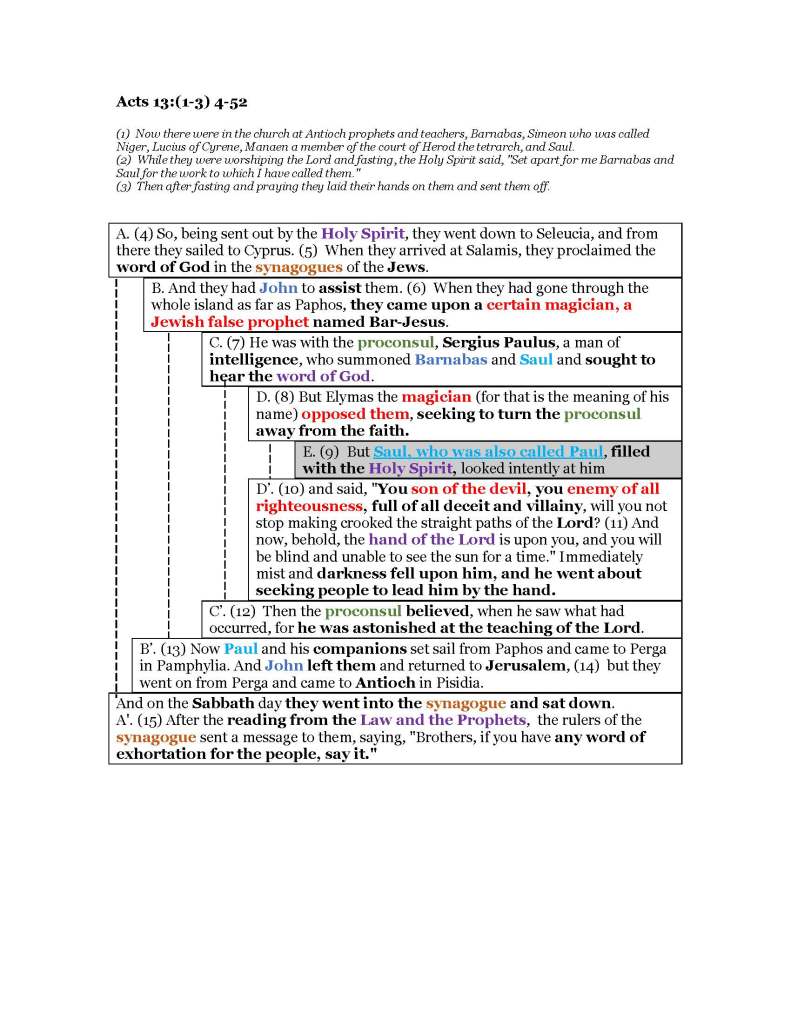
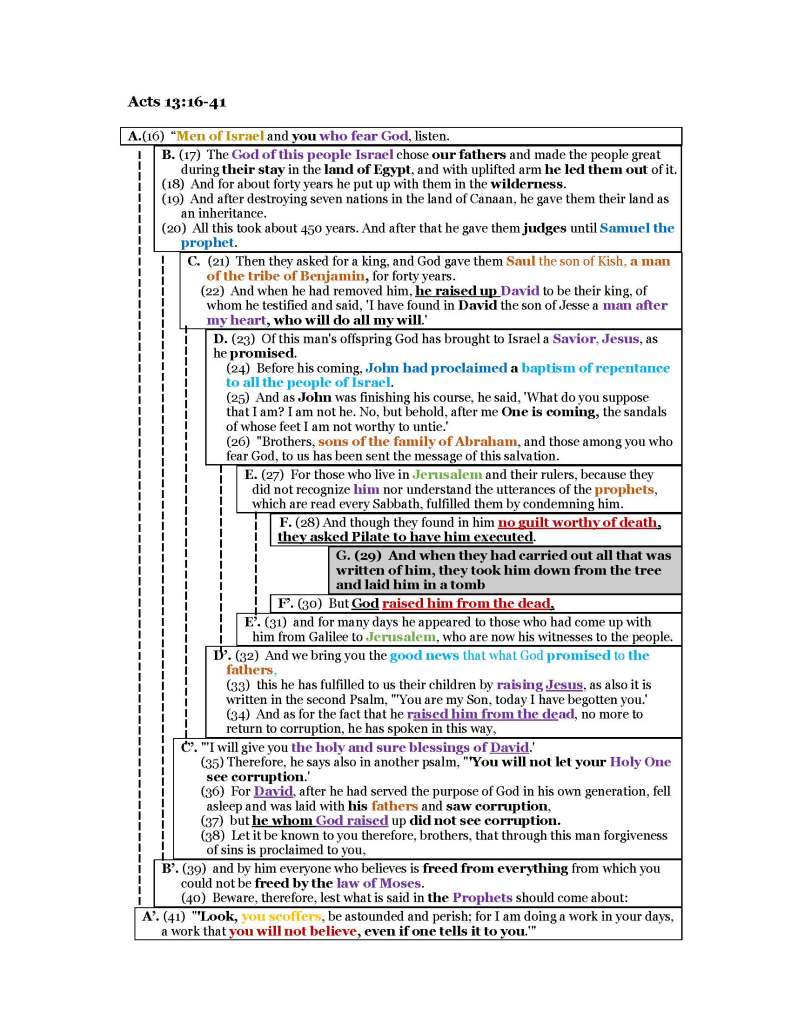
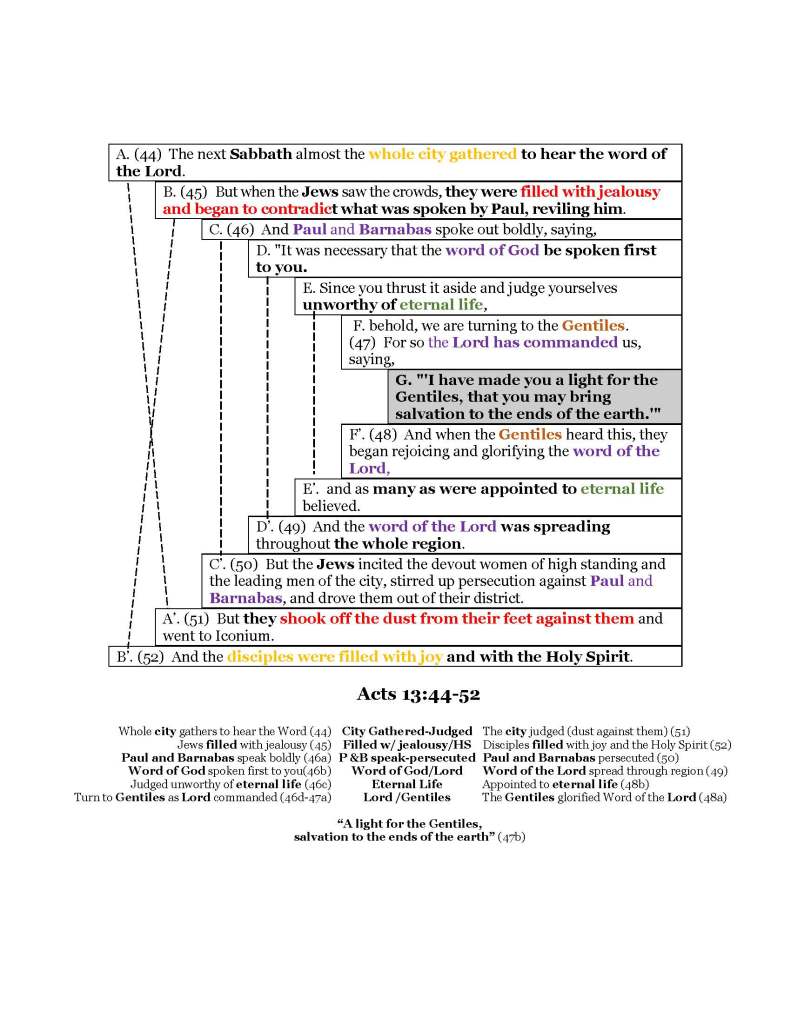
Acts 13 marks a pivotal point in the history of redemption: the expansion of the apostolic mission, commanded by Jesus, to go from the Jews in Jerusalem to the Gentiles around the world (Acts 1:8: “But you will receive power when the Holy Spirit has come upon you, and you will be my witnesses in Jerusalem and in all Judea and Samaria, and to the end of the earth”). The chapter includes (i) Saul’s ordination (13:1-3), (ii) the changing of his name to Paul (13:9), (iii) the story of Paul’s first convert (13:6-12), and (iv) Paul’s first recorded and most detailed sermon (13:16-41), and the bold declaration that the salvation of the Jews now extends—through Christ—fully to the Gentiles. The rest of the book of Acts focuses on Paul’s mission to the Gentiles and the spread of the kingdom to the ends of the earth. Christ taking dominion of the whole world is the dominant theme of Acts 13-28.
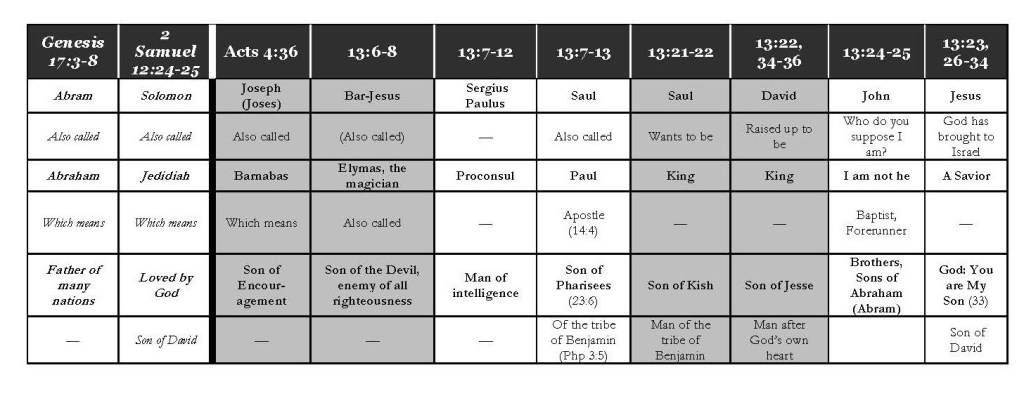
A Play on Names in Acts 13
Two Antiochs–(13:1) Antioch in Syria and (13:14) Antioch in Pisidia, and more
Leithart on Acts 13:38-39: Christ or Torah
What appears to be Paul’s first recorded statement on justification comes in Acts 13, in a sermon at Pisidian Antioch. He briefly recounts the history of Israel, concluding with the resurrection that the promise of forgiveness and justification. Verse 39 (v. 38 in the Greek text) states that “through Him everyone who believes is justified from all things, from which you could not be justified through the law of Moses.” Several elements are well-known Pauline themes: justification through faith, the contrast of justification by faith and justification by law. Several features of this passage, though, are unusual, and may point to fresh angles on Paul’s discussions of justification in his letters. First, the addition of Mouseus specifies that Paul is not speaking of legal regulations in general but specifically of the Mosaic legislation. Second, Paul speaks here of being justified from (apo) all things. Typically, Paul writes of being justified without any indication that there is something to be justified from. This hints that dikaioo here is not so much a verdict as an act of liberation, and many translators have followed that hint by translating the word as “freed.” Finally, the contrast is not strictly between justification by faith and justification, but between justification from all things dia toutou, through this (resurrected) one, and justification en nomo. The contrasting instruments – or, better, subjects– of the liberation are not faith and works but Jesus and the law of Moses. As Paul says in Romans 8, God has done what the law could not do, sending His son in the likeness of flesh as an offering for sin. In Acts 13:39, then, justification is “liberation from all (enslaving) things through Christ, including those enslavements that the law could not liberate from.”
Recommended Readings
David A. Dorsey, The Literary Structure of the Old Testament: A Commentary on Genesis-Malachi (Baker Academic, 1999)
James B. Jordan, Through New Eyes: Developing a Biblical View of the World (Wipf and Stock Publishers, 1999)
Peter J. Leithart, A House for My Name: A Survey of the Old Testament (Canon Press, 2000)
Victor M. Wilson, Divine Symmetries: The Art of Biblical Rhetoric (1997)
“Recovering the Old Testament as a text in which Christians live and move and have their being is one of the most urgent tasks before the church. Reading the Reformers is good and right. Christian political activism has its place. Even at their best, however, these can only bruise the heel of a world that has abandoned God. But the Bible–the Bible is a sword to divide joints from marrow, a weapon to crush the head.”
Peter Leithart, The Kingdom and the Power
 Ascended King
You must be logged in to post a comment.